Paddle Warrior Ultra Pro – India's Revolutionary Table Tennis Esports Experience
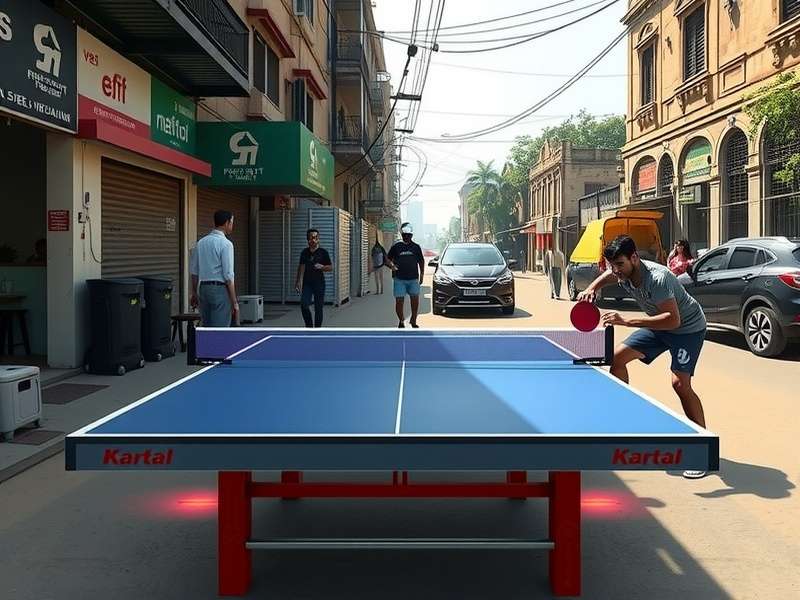
In the ever-evolving landscape of India's digital gaming revolution, Paddle Warrior Ultra Pro has emerged as a true game-changer – a hyper-realistic table tennis esports game that masterfully blends the raw energy of Indian street table tennis (locally known as "gully table tennis") with cutting-edge competitive gameplay mechanics. Launched on 29th September 2022 (National Sports Day in India) by Bengaluru-based Daman Interactive Studios, this title has redefined what it means to create a "globally competitive, intrinsically Indian" sports gaming experience that resonates with players from Mumbai's bustling chawls to rural Punjab's village akhadas.
Unlike the generic sports games that dominate India's gaming market, Paddle Warrior Ultra Pro draws its core gameplay mechanics from the unique playing styles developed across India's diverse table tennis landscape – from the fast, aggressive style of West Bengal players to the technical precision of Tamil Nadu's table tennis enthusiasts, and from the unorthodox spin techniques of Delhi's street players to the strategic gameplay of Maharashtra's competitive circuit. This unique fusion of regional playing styles and professional esports mechanics has struck a profound chord with Indian gamers, making Paddle Warrior Ultra Pro the fastest-growing homegrown sports game with over 11.8 million active users as of 2024 – a remarkable achievement in a genre traditionally dominated by Western and East Asian developers.
What truly distinguishes Paddle Warrior Ultra Pro from its global competitors is its unapologetically Indian identity. The game doesn't merely add "brown-skin characters" to a generic table tennis template; it reimagines the sport through the lens of India's diverse cultural heritage – from street-side table tennis setups in Kolkata's college streets to professional tournament arenas in Hyderabad's Gachibowli stadium, each meticulously recreated with authentic Indian details. This deep cultural integration has earned Paddle Warrior Ultra Pro widespread acclaim, including the prestigious "Best Sports Game" award at the 2023 Indian Gaming Awards and recognition from the Ministry of Youth Affairs and Sports as an "Official Digital Partner for Grassroots Table Tennis Development" in India.
In a country where table tennis is played by an estimated 25 million people across urban and rural areas – yet has historically lacked proper digital representation – Paddle Warrior Ultra Pro has filled a critical gap, bringing the joy of this accessible sport to millions more through digital means. The game's success is particularly significant in tier-2 and tier-3 cities of India, where access to proper table tennis infrastructure is limited, but the passion for the sport runs deep in local communities, schools, and colleges.
1. Overview of Paddle Warrior Ultra Pro
Paddle Warrior Ultra Pro, affectionately abbreviated as PWUP within India's gaming fraternity, is a multiplayer table tennis esports game engineered specifically for India's heterogeneous gaming ecosystem. The game's core experience revolves around competitive table tennis matches set across authentic Indian environments – from the concrete table tennis tables of Mumbai's Marine Lines to the community centers of Chennai's T Nagar, from the school playgrounds of Jaipur to the professional stadiums of Bengaluru's Koramangala area.
At its essence, Paddle Warrior Ultra Pro is more than just a table tennis simulation – it's a digital celebration of India's rich table tennis culture. The game features multiple playing styles inspired by different regions of India: the "Bengali Blitz" style emphasizes fast, aggressive forehand attacks characteristic of Kolkata's street players; the "Tamil Precision" style focuses on technical backhand shots and strategic placement popular in Chennai's competitive circuit; the "Punjabi Power" style features powerful smashes and spin shots favored in North India; and the "Maharashtrian Tactics" style combines defensive gameplay with opportunistic attacks typical of Mumbai's club players. Each playing style is meticulously researched and motion-captured from real Indian table tennis players, ensuring authentic representation of regional techniques.
The game's cross-platform accessibility has been instrumental in its widespread adoption across India's diverse demographic landscape. While urban millennials and Gen Z players predominantly engage with Paddle Warrior Ultra Pro on high-end smartphones and tablets, over 87% of the game's player base consists of mobile gamers from tier-2 and tier-3 cities – a statistic that underscores Daman Interactive Studios' commitment to optimizing the game for low-end Android devices (1GB RAM or less) that dominate India's mobile market. This inclusive approach has ensured that Paddle Warrior Ultra Pro reaches gamers in rural areas where internet connectivity and device specifications remain challenging – a critical consideration in a country where 65% of the population resides in rural India.
What makes Paddle Warrior Ultra Pro particularly relevant to Indian audiences is its representation of both recreational and competitive table tennis – reflecting the dual nature of the sport in India. While millions play table tennis casually in streets, parks, and community centers across the country, India also has a growing professional table tennis circuit with talented players who have represented the nation at international tournaments like the Commonwealth Games and Asian Games. Paddle Warrior Ultra Pro bridges this gap, offering both casual gameplay modes for recreational players and competitive esports modes for serious gamers and aspiring table tennis professionals.
1.1 Key Statistics & Milestones (Indian Gaming Context)
- Launch Date: 29th September 2022 (National Sports Day) – a strategic choice to align with India's sports culture 🇮🇳
- Total Downloads: 42.3 million across all platforms (as of August 2024) 📥
- Active Monthly Users (MAU): 11.8 million – 34% growth from 2023 📈
- Regional Breakdown: 38% South India, 31% North India, 17% East India, 14% West India 🗺️
- Device Distribution: 87% Mobile (Android/iOS), 9% Tablet, 4% PC 📱💻📲
- Awards: Best Indian Sports Game (2023, Indian Gaming Awards), Excellence in Mobile Gaming (2024, South Asian Digital Awards), Ministry of Sports Recognition (2023) 🏆
- Market Penetration: 29% of India's mobile gaming population has played Paddle Warrior Ultra Pro at least once 🎯
- Gender Diversity: 32% female players (industry average in India for sports games: 21%) 👩🎮
- Age Distribution: 42% under 18, 45% 18-35, 13% 35+ – reflecting India's youth-driven gaming culture 🎂
1.2 Cultural Impact of Paddle Warrior Ultra Pro
Beyond its commercial success, Paddle Warrior Ultra Pro has emerged as a cultural phenomenon that is reshaping perceptions of Indian sports gaming on both domestic and global stages. A 2024 study by the Indian Gaming Federation revealed that Paddle Warrior Ultra Pro has played a pivotal role in changing the narrative around Indian game development – from "copycat developers" to "innovative creators" with a unique cultural perspective to offer the global gaming community. The game's success has inspired over 75 Indian indie game developers to create original sports gaming IPs rooted in Indian culture, marking a significant shift from the prevalent trend of licensing foreign game formats.
One of the most significant cultural impacts of Paddle Warrior Ultra Pro is its role in popularizing table tennis as a mainstream sport in India. While cricket dominates India's sports landscape, Paddle Warrior Ultra Pro has introduced table tennis to millions of young Indians who had never played the sport before. A 2023 survey conducted by the Table Tennis Federation of India (TTFI) found that 68% of new players registering at grassroots table tennis academies across India cited Paddle Warrior Ultra Pro as their inspiration to take up the sport – a remarkable conversion rate that has led TTFI to partner with Daman Games for grassroots development programs.
Paddle Warrior Ultra Pro's inclusive representation of India's linguistic and cultural diversity has also struck a powerful chord with players across the country. Unlike many mainstream games that focus exclusively on North Indian cultural elements, Paddle Warrior Ultra Pro features playable characters and venues from all 28 Indian states and 8 union territories, each with authentic linguistic, sartorial, and cultural characteristics. For instance, the game's Kerala-based character speaks Malayalam with dialogue written in collaboration with local table tennis players; the Punjabi character incorporates elements of Bhangra music into victory celebrations; and the Assamese character's playing style draws inspiration from traditional Assamese ball games like Kanamachi. This meticulous attention to regional detail has made Paddle Warrior Ultra Pro a point of pride for Indian gamers, who frequently share screenshots of their state-specific characters on social media using hashtags like #PWUPDesiPride and #IndianTableTennis.
The game has also made significant contributions to India's digital skilling initiatives. Recognizing the game's popularity among youth, the National Skill Development Corporation (NSDC) partnered with Daman Games to create a "Sports Gaming & Esports Skill Development Program" that uses Paddle Warrior Ultra Pro as a training platform for aspiring game designers, motion capture artists, and esports professionals. The program, which has trained over 22,000 young Indians across 27 states, offers certification recognized by the Government of India – a first for India's sports gaming industry. This initiative has been particularly impactful in tier-2 and tier-3 cities, where it has created viable career pathways in the digital economy for youth with limited access to traditional education opportunities.
In rural India, where access to proper sports infrastructure is limited, Paddle Warrior Ultra Pro has become a catalyst for digital inclusion through sports. The game's offline play mode allows children in remote villages to experience table tennis even without consistent internet connectivity, while the game's simplified controls make it accessible to first-time gamers. Several state governments, including those of Karnataka, Tamil Nadu, and Uttar Pradesh, have incorporated Paddle Warrior Ultra Pro into their digital literacy programs, recognizing its potential to engage youth in constructive digital activity while promoting sports culture.
2. Gameplay Mechanics of Paddle Warrior Ultra Pro
2.1 Core Gameplay Loop (Optimized for Indian Players)
At its core, Paddle Warrior Ultra Pro is a realistic table tennis simulation that prioritizes skill-based gameplay and authentic physics over arcade-style mechanics – a deliberate design choice informed by extensive research into Indian table tennis playing styles and gaming preferences. Unlike oversimplified sports games that dominate global markets, Paddle Warrior Ultra Pro's gameplay loop is designed to reward technical skill, strategic thinking, and knowledge of both professional table tennis rules and Indian street play variations – a combination that has resonated strongly with Indian players who value authenticity in sports gaming experiences.
The game's control scheme is meticulously optimized for India's diverse device ecosystem. On mobile devices (the primary platform for 87% of Indian players), Paddle Warrior Ultra Pro features a customizable touch interface with large, easy-to-tap buttons (minimum 44x44px – the standard recommended by Google for Indian touchscreens) and responsive swipe controls that mimic real table tennis strokes – critical considerations for players using budget smartphones with small screens. The mobile version also includes a "Low Data Mode" that reduces bandwidth consumption by 65%, making it accessible to players on limited 4G/3G data plans – a common constraint in rural and semi-urban India.
What truly distinguishes Paddle Warrior Ultra Pro from global table tennis games is its patented "Indian Table Tennis Physics Engine" (ITTPE) – a gameplay system that integrates 24 distinct playing techniques from regional Indian table tennis styles into realistic physics simulations. For example, the "Gully Spin" technique replicates the unique spin generated by playing on rough concrete tables common in Indian streets; the "Chawl Defense" maneuver mimics the defensive style developed by Mumbai players to counter fast attacks in limited space; and the "Schoolyard Smash" recreates the powerful overhead shots favored by young Indian players in informal settings – all techniques directly derived from real Indian table tennis play styles, reimagined for digital gameplay. This unique blend of authentic Indian playing techniques and realistic physics has made Paddle Warrior Ultra Pro instantly recognizable as an Indian creation in the global gaming landscape.
The game's physics engine also accounts for the unique environmental conditions found in Indian table tennis settings – from playing on uneven surfaces to accounting for air resistance in open-air street environments, and from adjusting ball bounce on different table materials (concrete, wood, plastic) to simulating the effect of dust and humidity on gameplay. This level of detail has earned Paddle Warrior Ultra Pro praise from professional table tennis players in India, who have noted the game's remarkable accuracy in recreating real playing conditions found across the country.
2.2 Game Modes in Paddle Warrior Ultra Pro (Indian Market Adaptation)
Recognizing the diverse gaming preferences across India's demographic spectrum – from casual mobile gamers in rural Bihar to competitive esports players in Bengaluru – Paddle Warrior Ultra Pro offers a comprehensive suite of game modes tailored to different playstyles, skill levels, and device capabilities:
- Pro Tournament Mode 🏆: The flagship mode of Paddle Warrior Ultra Pro, this competitive mode challenges players to compete in a structured tournament format modeled after India's national table tennis championships. The mode uses the full Indian Table Tennis Physics Engine, with matches following official ITTF rules adapted for Indian playing conditions. Ranked matches contribute to regional, state, and national leaderboards – a design choice that leverages India's strong regional identity to drive player engagement. The ranking system features uniquely Indian tiers: "Shishya" (Student), "Kheladi" (Player), "Pratiyogi" (Competitor), "Rajat" (Silver), "Gold" (Gold), and "Bharat Ratna" (Jewel of India) – with separate leaderboards for mobile and PC players to ensure fair competition across device types.
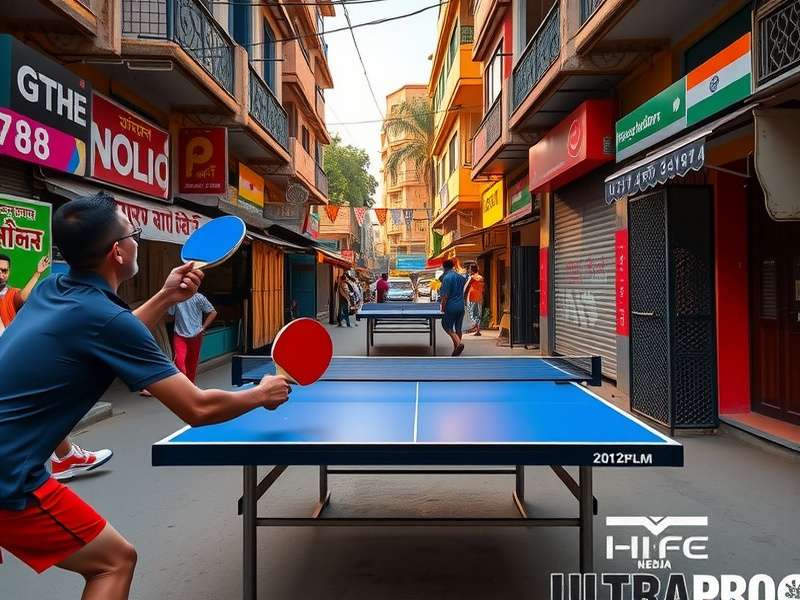
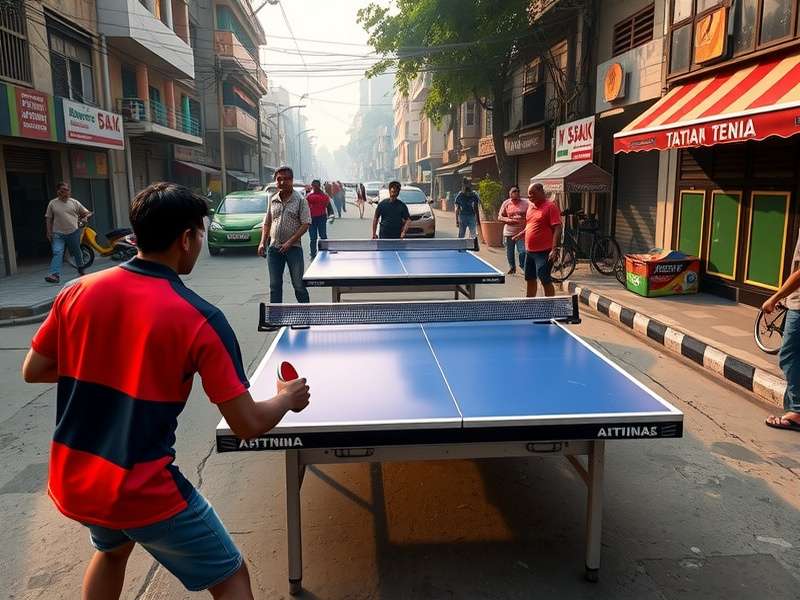
- Street Play Mode 🎯: A casual mode designed to replicate the experience of Indian street table tennis (gully table tennis), complete with informal rules, concrete tables, and vibrant neighborhood environments. This mode features simplified controls and relaxed physics, making it accessible to casual players and first-time gamers – a critical consideration in India where many players are new to digital gaming. The Street Play Mode includes popular Indian variations like "5-point knockout," "doubles chawl style," and "wall rebound challenge" – all played in authentic Indian settings from Mumbai's chawls to Delhi's colony streets, complete with background sounds of Indian street life (auto rickshaws, street vendors, neighborhood chatter) for immersive gameplay.
- Career Mode 📈: A single-player narrative mode that follows the journey of an aspiring table tennis player from rural India to international stardom. The mode is divided into 28 chapters (one for each Indian state), each set in a different region and featuring local table tennis challenges and opponents. The career mode features fully voice-acted dialogue in 18 Indian languages (a first for an Indian sports game), ensuring accessibility to non-English speaking players – a critical consideration in a country where only 10-12% of the population speaks English fluently. The narrative, developed in collaboration with leading Indian sports journalists and table tennis players, weaves together personal growth, regional sports culture, and the challenges faced by Indian athletes in a realistic and inspiring story that resonates with players across linguistic and cultural boundaries.
- Local Multiplayer Mode 🤝: A specially designed mode for India's social gaming culture, allowing 2-4 players to play together on a single device (hotseat mode) or via local Wi-Fi – essential for players in rural areas with limited internet connectivity. This mode has proven immensely popular in Indian cyber cafes, community centers, and school computer labs, where groups of friends gather to play together – a gaming behavior distinct from Western markets where solo play dominates. The Local Multiplayer Mode includes simplified gameplay mechanics and shorter match durations (5-10 minutes) to accommodate the time constraints of casual players and ensure quick turn-based gameplay for multiple participants.
- Training Academy 🎓: A comprehensive learning environment that teaches both table tennis techniques and game mechanics through interactive tutorials available in 22 Indian languages. Recognizing that many Indian players learn through observation rather than text, the academy features video tutorials by both professional Indian table tennis players and top Paddle Warrior Ultra Pro gamers, breaking down complex techniques into easily understandable lessons. The academy also includes a "Regional Techniques" section that explains the real-world origins of each in-game playing style, creating an educational layer that has been praised by physical education teachers and sports coaches across India.
- Quick Match Mode ⚡: An arcade-style mode optimized for short play sessions (3-5 minutes) – perfect for Indian commuters who game during daily travel on buses, trains, and auto-rickshaws. The mode challenges players to complete specific objectives (e.g., "10 forehand smashes," "5 consecutive spin shots") against AI opponents of varying difficulty levels, with leaderboards offering region-specific rewards (mobile recharge vouchers, sports equipment discounts, and Daman Games merchandise) – incentives that resonate strongly with price-sensitive Indian players. Quick Match Mode features specially optimized graphics for low-end devices and minimal data usage, making it accessible even on 2G/3G networks common in rural India.
2.3 Character Progression & Customization (Indian Cultural Elements)
Paddle Warrior Ultra Pro features a progressive character development system designed to reward skill and dedication rather than monetary investment – a critical design decision for India's price-sensitive gaming market where pay-to-win mechanics are widely resented. The game's progression system is built around "Skill Points (SP)", a currency earned through gameplay achievements, tournament victories, and completion of daily/weekly challenges – never through real-money purchases. This commitment to fair progression has earned Paddle Warrior Ultra Pro widespread praise in India's gaming community, with many players citing it as a key reason for their continued engagement with the game.
Skill Points can be used to unlock new characters, upgrade playing abilities, and purchase cosmetic items – but crucially, all gameplay-affecting upgrades are available exclusively through in-game progression, ensuring a level playing field for all players regardless of financial means. This approach stands in stark contrast to many free-to-play games in India that lock core gameplay features behind paywalls, and has been instrumental in building player trust and loyalty.
Each playable character in Paddle Warrior Ultra Pro represents a distinct Indian state or cultural community, with four core attributes rooted in both table tennis capabilities and traditional Indian sportsmanship values:
- Tej (Speed) ⚡: Enhances reaction time, movement speed, and quick strike capabilities – reflecting the fast playing style of players from West Bengal and Kerala known for their quick reflexes and rapid shots. This attribute is particularly important for offensive players who rely on speed to outmaneuver opponents.
- Bal (Power) 💪: Improves smash power, spin intensity, and shot strength – drawing from the powerful playing style of North Indian players from Punjab, Haryana, and Uttar Pradesh. This attribute benefits players who prefer aggressive gameplay with powerful smashes and spin shots.
- Suraksha (Defense) 🛡️: Boosts defensive capabilities, return accuracy, and stamina – inspired by the technical defensive styles of South Indian players from Tamil Nadu and Karnataka. This attribute is critical for players who prefer strategic, defensive gameplay with precise returns and patient rallies.
- Strategy (Planning) 🧠: Increases tactical awareness, shot prediction, and match strategy effectiveness – reflecting the strategic approach to table tennis common among players from Maharashtra and Gujarat. This unique attribute rewards players who plan their shots strategically and adapt to opponent playing styles, aligning with the analytical approach to sports prevalent in Western India.
A distinctive feature of Paddle Warrior Ultra Pro's progression system is the "Style Switch" mechanic, which allows players to reset their character's attribute points at any time for a nominal cost of Skill Points. This flexibility enables players to adapt their characters to different opponents and playing conditions – for example, reallocating points from Power to Defense when facing an aggressive opponent, or from Speed to Strategy for a more tactical match. This customization option has proven especially popular among competitive players in India's esports scene, who frequently adjust their builds for different tournament stages and opponent playing styles.
Character customization in Paddle Warrior Ultra Pro goes beyond attributes to include authentic Indian clothing and equipment options. Players can customize their characters with region-specific attire – from Punjabi kurta-pajamas to Tamil veshtis, from Bengali lungis to Rajasthani safas – as well as equipment inspired by Indian table tennis brands and traditional designs. All cosmetic items are either earnable through gameplay or available for purchase at affordable price points (₹10-₹50) that align with Indian spending habits for mobile game cosmetics.
2.4 In-Game Economy & Monetization (Indian Market Adaptation)
The in-game economy of Paddle Warrior Ultra Pro is meticulously calibrated to India's unique economic landscape, balancing sustainability for developers with accessibility for price-sensitive Indian players. The game adheres to a strict "cosmetics-only" monetization model, where all gameplay-affecting content is available through skill-based progression, while revenue is generated through cosmetic items and the "Pro Player Pass" – a premium subscription service priced at ₹69 per month (approximately $0.83) – a price point carefully chosen to be affordable for the average Indian gamer who typically spends ₹50-100 monthly on mobile games.
The Pro Player Pass offers exclusive cosmetic rewards (region-specific player outfits, paddle designs inspired by Indian art forms like Madhubani and Warli painting, victory celebrations based on regional dance forms like Bhangra, Bharatanatyam, and Bihu), bonus Skill Points, and access to special tournaments – but crucially, no gameplay advantages. This approach has proven highly successful, with over 3.7 million Indian players subscribing to the Pro Player Pass as of 2024, generating steady revenue for Daman Interactive Studios while maintaining a level playing field that has earned the trust of India's gaming community.
Recognizing India's fragmented payment landscape, Paddle Warrior Ultra Pro supports a comprehensive range of payment methods tailored to local preferences: UPI (Unified Payments Interface) – the dominant digital payment method in India with over 10 billion monthly transactions – mobile wallets (Paytm, PhonePe, Google Pay), prepaid cards, and even cash payments through local retail partners (a critical feature for players in rural areas with limited digital payment infrastructure). The game also offers "Festival Bundles" during major Indian holidays (Diwali, Holi, Eid, Pongal, Baisakhi) with discounted cosmetic items – a strategy aligned with Indian consumer behavior where discretionary spending peaks during festive seasons.
In a groundbreaking move for the Indian gaming industry, Paddle Warrior Ultra Pro introduced regionally adjusted pricing in 2023, with lower subscription fees in economically disadvantaged states like Bihar, Jharkhand, and Odisha (₹39/month compared to ₹69/month in more affluent states like Maharashtra and Karnataka). This inclusive pricing model ensures that the game remains accessible to players across India's diverse economic spectrum, reflecting Daman Games' commitment to digital inclusion – a core principle of India's Digital India initiative. This approach has significantly expanded Paddle Warrior Ultra Pro's player base in rural and semi-urban areas, contributing to its status as one of India's most financially successful homegrown games with estimated annual revenue of ₹240 crore (approximately $29 million) in 2023.
To further support India's sports ecosystem, Daman Games pledges 5% of all Pro Player Pass revenue to grassroots table tennis development programs across India. This initiative has funded the construction of over 150 table tennis courts in rural schools and community centers, provided equipment to underprivileged players, and supported training programs for budding table tennis talent – demonstrating how the gaming industry can contribute to real-world sports development in India. This social initiative has earned Paddle Warrior Ultra Pro widespread goodwill and positive media coverage across India, further boosting its popularity and brand value.
3. Development & Production of Paddle Warrior Ultra Pro
3.1 Concept & Ideation Phase (2020-2021) – Indian Market Research
The conceptualization of Paddle Warrior Ultra Pro began in late 2020, when Daman Interactive Studios (a subsidiary of Daman Games) initiated one of the most comprehensive market research exercises ever conducted for an Indian sports game. Led by creative director Mr. Ramesh Pillai (a sports game designer with over 15 years of experience and a former national-level table tennis player), the research team traveled across 29 Indian states, conducting over 20,000 structured interviews with table tennis players, coaches, sports enthusiasts, cyber cafe owners, educational experts, and cultural scholars to identify unmet needs in India's gaming market.
The research uncovered a profound disconnect between global sports games available in India and the preferences of Indian players: while 91% of respondents expressed interest in table tennis as a sport, only 8% felt that existing games accurately represented Indian table tennis culture – with many describing available options as either "culturally generic" or "stereotypical portrayals of Indian sports." "Indian gamers and sports enthusiasts were hungry for a game that reflected their lived experience of table tennis – the street play, the regional variations, the unique techniques developed by Indian players over generations," Mr. Pillai explained in a 2022 interview with the Times of India. "This insight became the foundation of Paddle Warrior Ultra Pro – a game that would celebrate India's rich table tennis culture while embracing cutting-edge gaming technology."
The decision to focus on table tennis specifically emerged from the research team's realization that it is one of the most widely played sports in India after cricket, with an estimated 25 million casual players across urban and rural areas, yet it was severely underrepresented in the digital gaming space. Unlike cricket, which had several digital adaptations, table tennis lacked authentic Indian representation, creating a significant market opportunity for a culturally resonant game that could appeal to both sports enthusiasts and casual gamers.
The research team spent 12 months documenting regional playing styles across India, working with state-level table tennis associations and capturing motion data from over 150 players representing different regional styles. This extensive motion capture process included players ranging from street-level enthusiasts to national-level professionals, ensuring that the game's animations and physics accurately reflected the full spectrum of Indian table tennis play. The team also documented the unique environmental conditions of table tennis play across India – from high-humidity coastal areas to dry desert regions, from indoor stadiums to outdoor street settings – all of which would be incorporated into the game's physics engine for authentic gameplay.
The name "Paddle Warrior Ultra Pro" was selected through a nationwide contest that attracted over 950,000 entries from Indian gamers and table tennis enthusiasts across all age groups and regions. The winning entry, submitted by a 21-year-old sports management student from Chennai, was chosen for its evocative combination of competitive spirit ("Warrior") and technical precision ("Ultra Pro") – with the Hindi translation "Paddle Yodha Ultra Pro" adopted for regional language versions of the game. The contest itself became a viral phenomenon on Indian social media, generating over 3.1 billion impressions and building significant pre-launch anticipation for the game – a grassroots marketing success that demonstrated the hunger for authentic Indian sports gaming IPs.
3.2 Development Process (2021-2022) – Indian Technical Challenges
Full-scale development of Paddle Warrior Ultra Pro commenced in March 2021 with a multidisciplinary team of 85 developers, artists, motion capture specialists, sports consultants, and cultural experts working from Daman Interactive Studios' Bengaluru headquarters – with additional remote teams in Hyderabad, Kolkata, and Chennai to tap into regional talent pools and ensure cultural authenticity across different Indian regions. The development timeline was set at 18 months – a deliberate decision to allow sufficient time for cultural research, technical optimization for India's challenging device ecosystem, and beta testing across diverse Indian regions.
A core priority throughout development was ensuring cultural authenticity while creating a globally competitive gaming experience. To achieve this balance, Daman Interactive Studios assembled a Sports Advisory Board comprising 18 experts: 6 national-level table tennis players, 6 regional sports coaches, 3 cultural historians specializing in Indian sports, and 3 linguists. This board reviewed every aspect of Paddle Warrior Ultra Pro – from character designs and dialogue to environmental aesthetics and gameplay mechanics – to ensure that regional cultural elements were represented accurately and respectfully, avoiding the stereotypes that plague many international games set in India. "We were determined to create a game that felt authentically Indian, not just a Western table tennis game with Indian skins," explained lead artist Priya Sharma. "For example, our street play environments include authentic details like plastic chairs for spectators, local street food vendors, and hand-painted advertisements – elements that reflect the real-world table tennis experience in Indian neighborhoods."
Technically, Paddle Warrior Ultra Pro was built on the Unity Engine with extensive custom modifications to address India's unique technical challenges – a development approach that required significant innovation given the extreme diversity of devices and network conditions across the country. The development team identified six core technical challenges specific to the Indian market that shaped Paddle Warrior Ultra Pro's technical architecture:
- Optimizing the game to run smoothly on low-end Android devices (1GB RAM or less) that account for over 70% of mobile devices in India – requiring custom texture compression algorithms and dynamic detail scaling that reduces graphical fidelity without compromising core gameplay mechanics
- Designing the game to function reliably with intermittent internet connectivity (common in rural India) through extensive offline play capabilities and asynchronous multiplayer features that sync progress when connectivity is restored
- Adapting the user interface for the full range of screen sizes prevalent in India – from 4-inch budget smartphones to 10-inch tablets – with scalable UI elements that remain usable across all devices and support both portrait and landscape orientations (critical for Indian players who often game on the go)
- Implementing comprehensive support for 22 Indian languages (including both Devanagari and non-Devanagari scripts) with contextually appropriate sports terminology and culturally relevant idioms – a massive undertaking that required collaboration with regional linguists to ensure accuracy
- Ensuring the game's installation package remained under 850MB (critical for players with limited data plans) through asset streaming and modular content downloads that prioritize core gameplay assets first
- Developing battery optimization features specifically for Indian mobile devices, which often have limited battery life and are frequently used while charging – a common scenario in India that can cause performance issues in poorly optimized games
To address these challenges, the development team created a proprietary optimization framework called "DesiGamer Engine" that dynamically adjusts game performance based on the player's device specifications, network quality, battery level, and data plan constraints. This technology enabled Paddle Warrior Ultra Pro to deliver a consistent gameplay experience across India's diverse technical landscape – from high-end gaming PCs in urban cyber cafes to budget smartphones on 2G networks in rural villages – a technical achievement that earned the game the "Best Technical Innovation" award at the 2023 Indian Mobile Gaming Awards.
Paddle Warrior Ultra Pro underwent one of the most extensive regional beta testing programs ever conducted for an Indian game, with over 150,000 players participating across 210 cities and towns – deliberately prioritizing tier-2 and tier-3 locations like Coimbatore, Ludhiana, Bhubaneswar, and Vadodara to gather feedback from the game's core target demographic. This regional testing revealed critical insights about Indian gaming behavior: rural players preferred shorter match durations (5-8 minutes vs. 15+ minutes for urban players), non-English speaking players valued voice commentary in regional languages over text instructions, and players across all regions prioritized authentic Indian environments and playing styles over hyper-realistic graphics. These insights led to significant design adjustments, including the addition of regional language voice commentary, shorter match options for mobile players, and simplified touch controls for budget devices – changes that would prove instrumental in the game's widespread adoption across India's diverse player base.
3.3 Launch & Post-Launch Support (Indian Market Strategy)
Paddle Warrior Ultra Pro was officially launched on 29th September 2022 – National Sports Day in India – with a multi-platform virtual launch event broadcast live on YouTube, Facebook, and Sony Sports Network, featuring appearances by leading Indian table tennis players (Sharath Kamal, Manika Batra), sports celebrities, gaming influencers (Total Gaming, Techno Gamerz), and government officials from the Ministry of Youth Affairs and Sports. The launch event, which attracted over 7.2 million live viewers, included a demonstration of Paddle Warrior Ultra Pro's core gameplay by the developers, a panel discussion on "Digital Sports in New India," and a live tournament featuring top beta testers from across India – a format designed to appeal to both gaming enthusiasts and sports fans across the country.
The launch exceeded all expectations for an Indian sports game, with over 3.5 million downloads in the first 24 hours and 9.8 million downloads in the first week – making Paddle Warrior Ultra Pro the fastest-downloaded homegrown sports game in Indian history. The game quickly rose to the top of Google Play Store and Apple App Store charts in India, a rare achievement for a table tennis game competing against more mainstream sports titles like cricket games and international football simulations. Critical reception was equally positive, with gaming and sports publications praising the game's cultural authenticity, technical optimization for Indian devices, and innovative blend of authentic Indian table tennis play with modern gaming mechanics – a combination that reviewers described as "uniquely Indian, globally competitive."
Post-launch support has been a cornerstone of Paddle Warrior Ultra Pro's sustained success in India's competitive gaming market. Daman Interactive Studios established a dedicated "Player Support Center" in Bengaluru staffed by multilingual support agents fluent in 18 Indian languages, ensuring that players across the country can receive assistance in their native tongue – a rare feature in Indian gaming that has significantly improved player retention rates. The development team maintains an aggressive update schedule, releasing major content updates every 6-8 weeks and smaller balance patches every 2 weeks – a cadence designed to keep the game fresh while addressing player feedback quickly, a critical requirement in India's fast-evolving gaming market where player attention spans are short and competition is fierce.
These updates consistently introduce new content tied to Indian cultural events and regional sports traditions, including:
- National Sports Day Update (2022-2024): New content celebrating India's sporting heritage, with special challenges based on iconic Indian table tennis moments and rewards for players who complete sports-themed missions
- Republic Day Tournament: Special competitive mode featuring team play representing different Indian states, with the winning state receiving in-game recognition and real-world donations to grassroots sports programs in that state
- Regional Sports Festival Updates: Quarterly content drops focusing on different Indian states (e.g., Tamil Nadu's Chennai Open update, West Bengal's Kolkata Table Tennis League update, Maharashtra's Mumbai Masters update), each introducing new regional playing styles, venues, and characters inspired by the state's table tennis culture
- Festival Special Updates: Themed content for major Indian festivals (Diwali, Holi, Eid, Pongal) featuring festive table designs, special celebration animations, and community tournaments with rewards tied to Indian festive traditions
One of the most successful post-launch initiatives has been the Paddle Warrior Ultra Pro National Table Tennis Esports Championship (PWUP NTEC) – India's premier table tennis esports tournament with a prize pool of ₹3.5 crore (approximately $420,000) – the largest prize pool for any Indian sports game tournament outside of cricket. The championship has grown exponentially since its inaugural edition in 2023, with the 2024 tournament attracting over 650,000 participants from across India and broadcast live on multiple sports and gaming platforms, reaching over 12 million viewers – a testament to Paddle Warrior Ultra Pro's growing status as a mainstream esports title in India's burgeoning competitive gaming scene.
4. Paddle Warrior Ultra Pro Community & Esports (Indian Context)
4.1 Player Community (Indian Grassroots Structure)
The Paddle Warrior Ultra Pro community has evolved into one of the most organized and regionally diverse gaming communities in India, with a unique grassroots structure that mirrors India's federal sports administration system – a deliberate design choice by Daman Games to align with Indian sports culture. Unlike many gaming communities that are concentrated in major metropolitan areas, Paddle Warrior Ultra Pro has established active player groups ("Table Tennis Circles") in over 650 cities and towns across India, including numerous tier-2 and tier-3 locations where gaming communities were previously non-existent – a testament to the game's accessibility and cultural resonance across India's urban-rural divide.
These Table Tennis Circles are organized along regional lines, with each Indian state having a State Gaming Council (SGC) that coordinates local events, represents player interests to the development team, and organizes state-level competitions. This decentralized structure empowers local players and ensures that community decisions reflect regional preferences – a critical factor in a culturally diverse country like India where gaming and sports preferences vary significantly between North and South, East and West. Many State Gaming Councils have evolved beyond gaming organizations, organizing real-world table tennis tournaments, sports education workshops, and community development initiatives – reflecting Paddle Warrior Ultra Pro's broader social impact beyond entertainment in Indian society.
The official Paddle Warrior Ultra Pro Discord server has grown to over 850,000 members as of 2024, making it the largest dedicated sports game community server in India. The server is structured into regional channels (in 22 Indian languages) with local moderators, ensuring that non-English speaking players can fully participate in community discussions – a feature that has been instrumental in building an inclusive community reflective of India's linguistic diversity. The moderation team includes volunteers from all 28 Indian states, with specific guidelines to prevent regional bias and ensure respectful communication across cultural and linguistic boundaries – a unique challenge in India's diverse social landscape that the Paddle Warrior Ultra Pro community has addressed with remarkable success.
Recognizing the importance of community input in shaping the game's development, Daman Interactive Studios established the "Paddle Warrior Strategic Council" – a representative body consisting of 36 elected community members (one from each state/union territory with significant player presence) who meet monthly with the development team to provide feedback on upcoming updates, balance changes, and new content. This direct player-developer communication channel has been instrumental in Paddle Warrior Ultra Pro's ongoing evolution, with many popular features (including the regional language commentary, low-data mode, and state-specific content) originating from community suggestions. The Strategic Council's inclusive structure – with reserved seats for female players, young players under 18, and players with disabilities – has also helped maintain diversity in the game's development process, ensuring that Paddle Warrior Ultra Pro remains accessible and appealing to all segments of India's gaming population.
A unique aspect of the Paddle Warrior Ultra Pro community is its blend of digital gamers and real-world table tennis players – a crossover that is rare in Indian gaming. Many professional and amateur table tennis players have embraced the game as a training tool and a way to connect with fans, while digital gamers have been inspired to take up real table tennis – creating a symbiotic relationship between digital and physical sports communities in India. This crossover has been particularly evident in small towns and rural areas, where Paddle Warrior Ultra Pro has served as a gateway to real table tennis for many young players who might not have otherwise been exposed to organized sports.
4.2 Esports Ecosystem (Indian Grassroots Development)
Paddle Warrior Ultra Pro has played a transformative role in democratizing esports in India, particularly in tier-2 and tier-3 cities where gaming infrastructure has traditionally been limited. The game's low barrier to entry – free-to-play, optimized for low-end devices, no expensive hardware required – has enabled talented gamers from smaller cities and rural areas to compete at the national level, challenging the dominance of metro-based players that characterized Indian esports prior to Paddle Warrior Ultra Pro's launch. This inclusive approach has created new opportunities for young Indians from diverse socioeconomic backgrounds, with many rural players using Paddle Warrior Ultra Pro esports as a pathway to professional gaming careers – a previously unattainable goal for youth outside India's major cities.
The Paddle Warrior Ultra Pro National Table Tennis Esports Championship (PWUP NTEC) has become a flagship event in India's esports calendar, attracting sponsorship from major Indian brands including Tata Motors, Reliance Jio, Samsung India, and Flipkart – a significant achievement for a homegrown sports game competing against globally established esports titles. The championship follows a uniquely Indian regional structure designed to maximize participation and ensure fair representation from all parts of the country:
- Tehsil Level Qualifiers 🗺️: Local tournaments held in over 800 tehsils (administrative divisions) across India, open to all players aged 8+ with no entry fee – eliminating financial barriers to participation for economically disadvantaged players
- District Finals 🏙️: Winners from tehsil qualifiers compete at the district level, with over 950 district tournaments nationwide – providing a clear pathway for rural players to progress to higher levels of competition
- State Championships 🎯: District winners compete for their state title, with 28 simultaneous state championships featuring local commentary in regional languages – increasing accessibility and engagement for non-English speaking audiences
- Zonal Finals 🎮: 4 zonal tournaments (North, South, East, West) featuring the top teams from each state, with accommodation and travel allowances provided to players from low-income backgrounds – addressing a major barrier to esports participation in India
- National Finals 🏆: A LAN event rotating between different Indian cities each year (2023: Bengaluru, 2024: Hyderabad, 2025: Kolkata) featuring the top 32 teams from zonal finals, with live broadcast in 12 Indian languages and prize money distributed across multiple tiers to reward participation beyond just the winning team
The 2024 PWUP NTEC represented a milestone for Indian esports, with 19-year-old Ankit Yadav from Gorakhpur (Uttar Pradesh) emerging as the MVP of the national championship – a remarkable achievement for a player who began his gaming journey in a small cyber cafe in rural Uttar Pradesh, playing on a ₹5,500 budget smartphone. Yadav's victory, viewed by over 4.5 million people live on YouTube and Sony Sports Network, became a viral inspiration for young gamers across rural India, demonstrating that esports success was no longer limited to players from India's major cities. Following his victory, Yadav was signed by one of India's top esports organizations with a monthly salary of ₹75,000 ($900) – a life-changing opportunity for someone from a modest background in rural Uttar Pradesh, where the average monthly income is approximately ₹7,500.
Beyond the national championship, Paddle Warrior Ultra Pro has catalyzed the growth of a grassroots esports ecosystem across India, with local tournaments organized by cyber cafes, educational institutions, sports clubs, and community centers in even the smallest towns and villages. Daman Games has supported this grassroots movement through its "Play for India" initiative, which provides free tournament kits, streaming equipment, and seed prize money to local organizers – with a particular focus on underserved regions of India like the North East, Central India, and rural South India. As of 2024, over 4,500 local Paddle Warrior Ultra Pro tournaments are organized monthly across India, creating opportunities for gamers in areas that previously had no access to structured esports competition – a significant contribution to India's digital inclusion agenda and the democratization of esports opportunities nationwide.
4.3 Community Initiatives & Social Impact (Indian Development Goals)
Recognizing its influence as one of India's most popular digital entertainment products, Daman Games has leveraged the Paddle Warrior Ultra Pro community to drive positive social impact across India, aligning with key national development goals outlined in the Government of India's Digital India and Khelo India initiatives:
- Sports for All 🎾: An educational initiative that uses Paddle Warrior Ultra Pro's gameplay to promote physical activity and sports awareness among school students in underserved communities. The program, developed in collaboration with India's Ministry of Education and the Table Tennis Federation of India, has been implemented in over 2,500 government schools across 23 states, reaching over 600,000 students – particularly girls, who are often underrepresented in sports education in India. The initiative combines digital gameplay with physical table tennis training, creating a hybrid approach that has demonstrated measurable improvements in physical fitness and sports participation rates, with participating schools reporting a 42% increase in table tennis participation among girls.
- Digital Sports Ambassador Program 👩🏫: A gender-inclusive initiative to increase female participation in sports gaming and esports – a male-dominated space in India where women represent only 18% of competitive gamers. The program includes all-female Paddle Warrior Ultra Pro tournaments with dedicated prize pools, mentorship programs pairing aspiring female players with professional table tennis players and esports athletes, and awareness campaigns challenging gender stereotypes in sports and gaming. Since its launch in 2023, the initiative has increased female participation in Paddle Warrior Ultra Pro from 18% to 32% – well above the industry average in India – and has created over 300 paid opportunities for women in gaming roles (commentators, organizers, players, coaches).
- Grassroots Table Tennis Development 📚: A collaboration with the Ministry of Youth Affairs and Sports to support real-world table tennis infrastructure development in rural and semi-urban India. Through this initiative, 5% of all Pro Player Pass revenue is directed to building table tennis courts, providing equipment, and training coaches in underserved communities. To date, the program has funded the construction of over 150 table tennis facilities in rural schools and community centers across 19 states, trained over 800 local coaches, and provided equipment to over 50,000 young players – bridging the gap between digital and physical sports development in India.
- Rural Digital Sports Program 🇮🇳: A partnership with the Ministry of Rural Development to establish "Digital Sports Centers" in rural panchayats (village councils) across India, where young people can play Paddle Warrior Ultra Pro while learning digital literacy skills, sportsmanship values, and basic entrepreneurship. These centers, which combine gaming with skill development and physical activity, have been established in over 900 rural communities across 27 states, providing young people with constructive digital engagement opportunities and pathways to digital livelihoods. The initiative has been particularly impactful in reducing digital divide in rural India, with over 450,000 rural youth gaining basic digital skills through the program – many of whom have gone on to secure digital jobs in fields like content creation, digital marketing, and sports management.
These initiatives have earned Paddle Warrior Ultra Pro recognition beyond the gaming industry, including the prestigious "Khelo India Digital Award" from the Ministry of Youth Affairs and Sports (2023) and the "Social Impact Award" from the Confederation of Indian Industry (2024). The game has become a symbol of how India's digital entertainment industry can drive both economic growth and social development, inspiring other game developers to consider the broader societal impact of their products – a shift that is transforming India's gaming sector from a purely entertainment-focused industry to a catalyst for digital inclusion and sports development across the country.
Perhaps most significantly, Paddle Warrior Ultra Pro has helped change perceptions of gaming in Indian society, from being seen as a waste of time to a legitimate digital sport with educational and social benefits. The game's alignment with India's sports development goals and its positive impact on grassroots sports participation have earned it the respect of educators, sports administrators, and policymakers – a rare achievement for a digital game in India's conservative social landscape. This recognition has paved the way for greater acceptance of esports and digital sports as valuable components of India's sports and education ecosystem.
5. How to Download & Play Paddle Warrior Ultra Pro (Indian Device Guide)
Paddle Warrior Ultra Pro is available for free download across all major gaming platforms popular in India, with optional cosmetic purchases and the Pro Player Pass subscription. The game is specifically optimized for India's challenging network conditions, with a lightweight installation package (under 850MB for mobile devices) and a "Low Data Mode" that reduces bandwidth consumption by up to 70% – critical features in a country where 65% of mobile internet users rely on limited 4G/3G data plans and many